
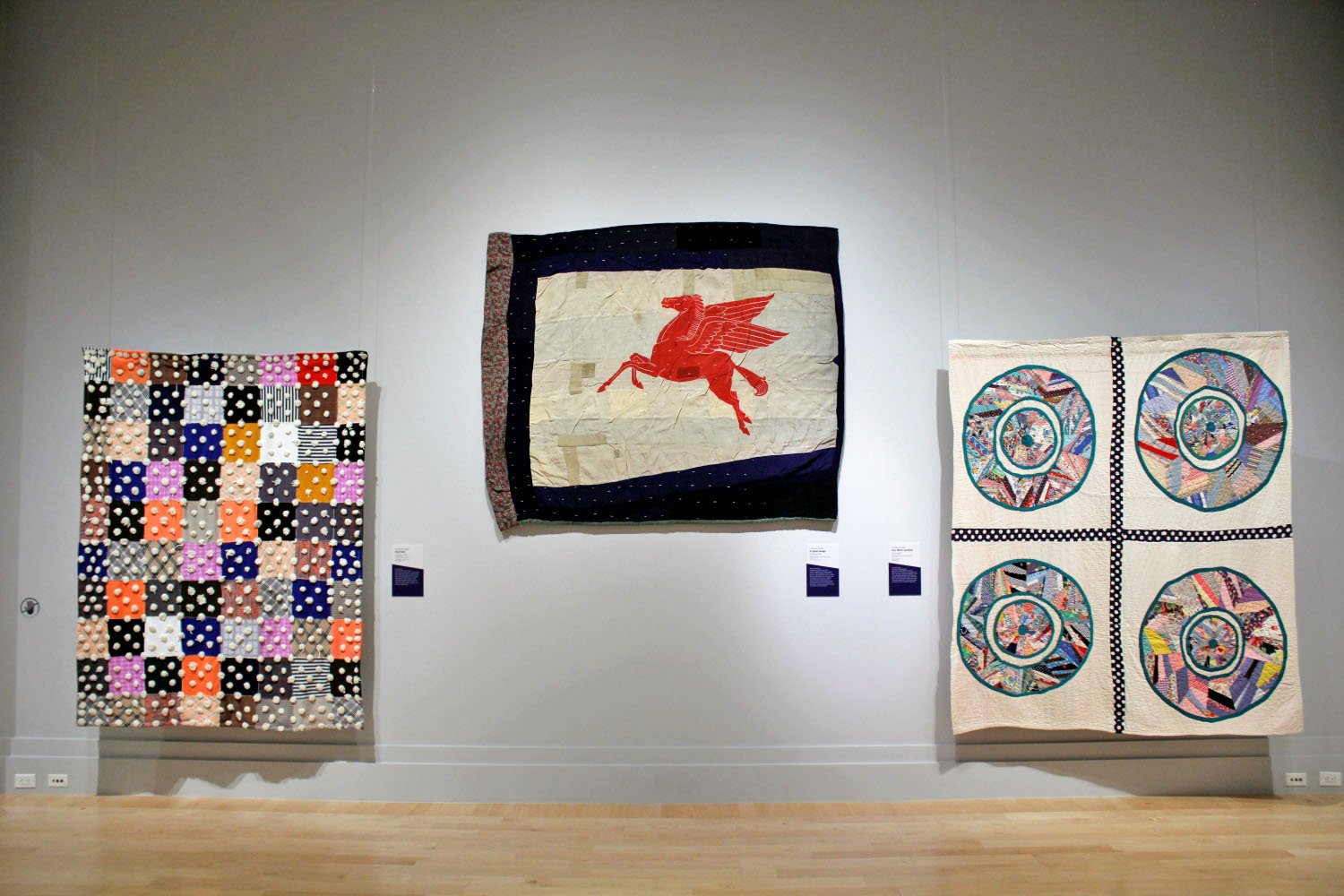
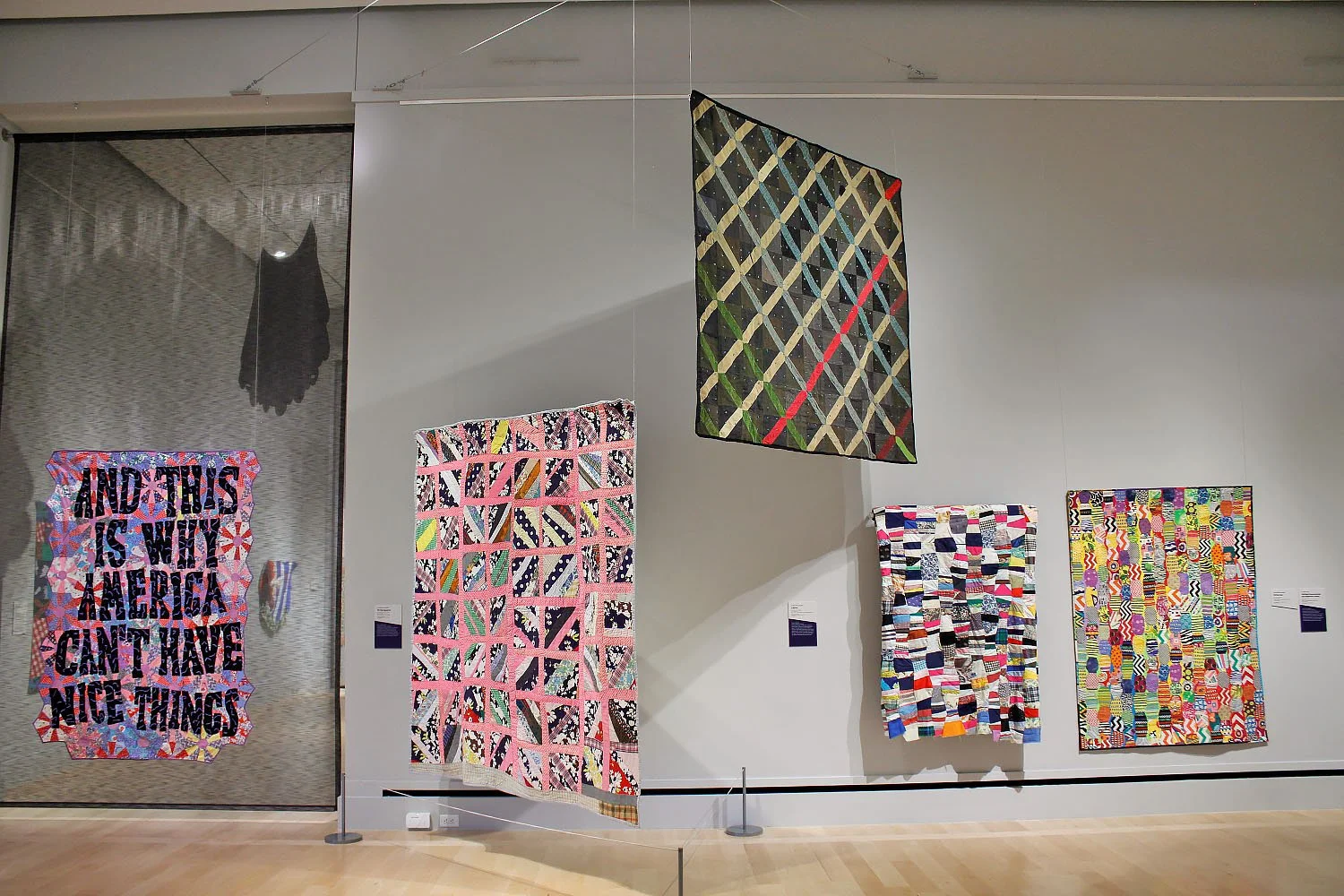
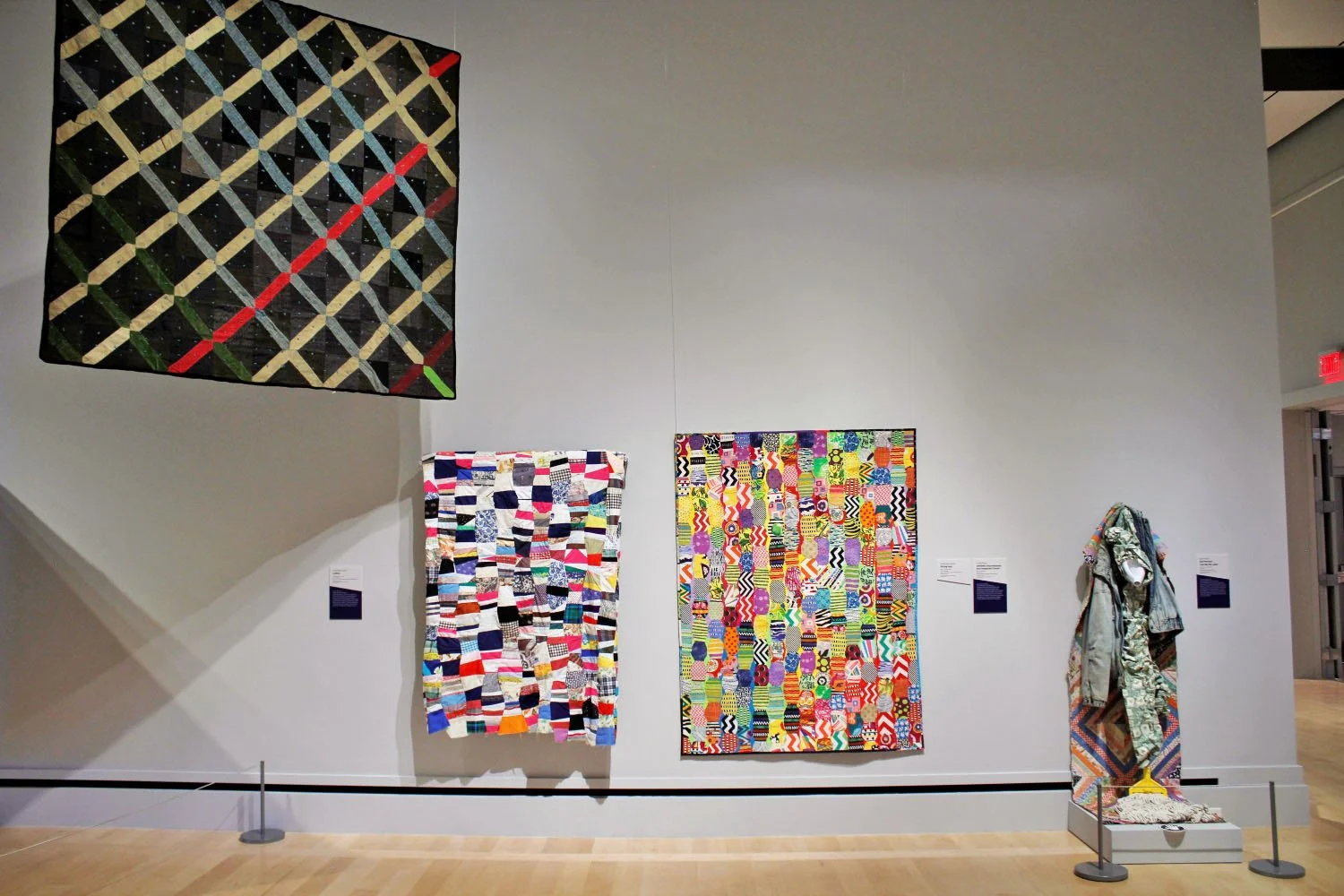
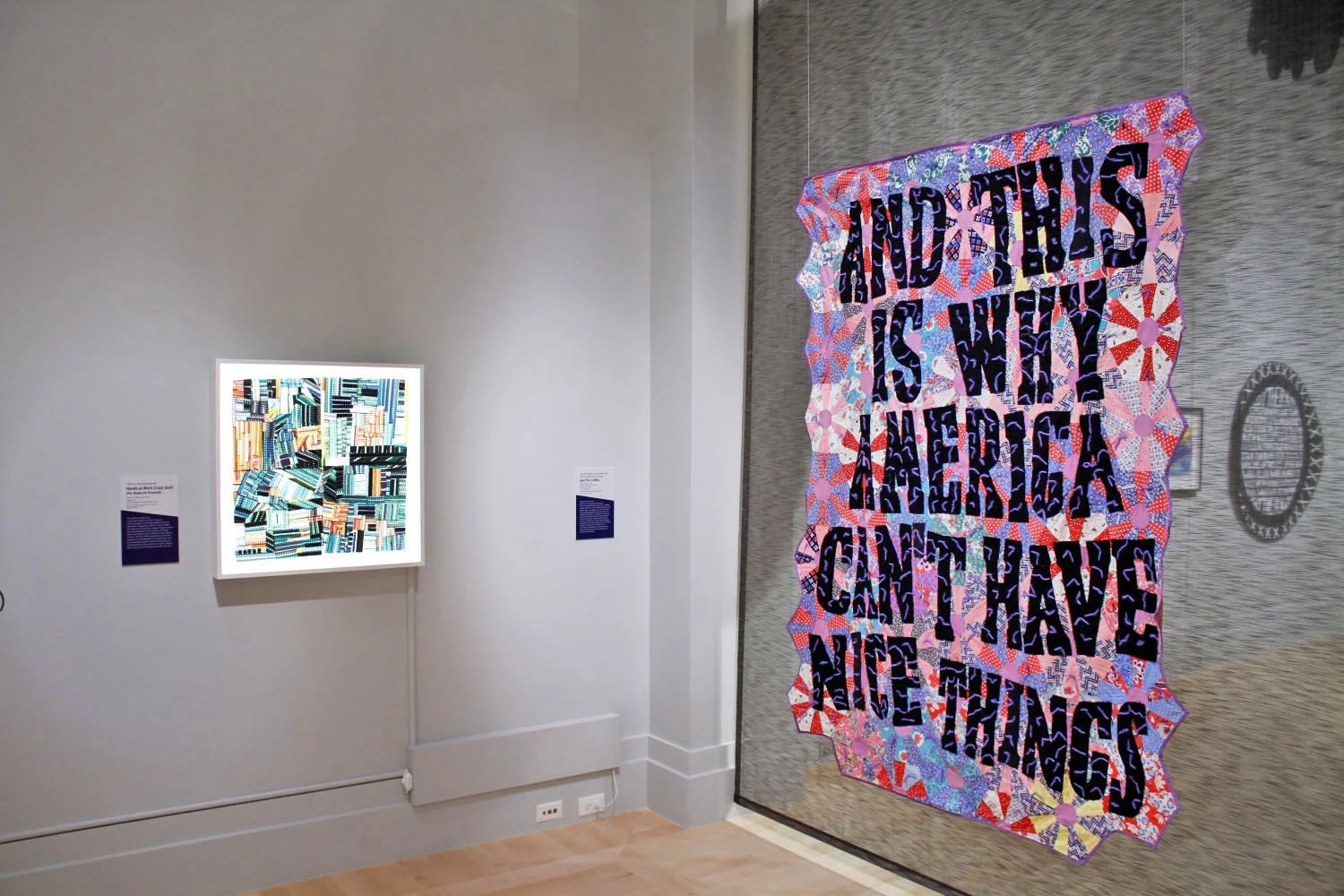
I am thrilled to have quilts from my collection on view at the International Quilt Museum (IQM) in The Collector’s Eye: Roderick Kiracofe.
Quilts from the official Roderick Kiracofe Collection at IQM join other contemporary quilts that I love and have collected. Alongside them is quilt-related artwork from artists outside the quilting realm yet borrowing heavily quiltmaking strategies. I am honored to have work in the exhibition from artists and makers that include Zak Foster, Sabrina Gschwandtner, Basil Kincaid, and the late Freddy Moran.
A fun addition from the IQM collection is Marilyn Henrion’s small, quilted portrait of yours truly, next to the main wall text of the exhibition.
If you cannot make it to Lincoln, the best experience is to watch the virtual gallery tour hosted by Tara Miller of the Quilt District. I really enjoyed our conversation with Sarah Walcott, the Ardis B. James Curator of Collections at the International Quilt Museum in Lincoln, Nebraska.
And, of course, a huge thank you to the International Quilt Museum for sharing all these works with the public.
The Collector’s Eye: Roderick Kiracofe
3 December 2025 - 28 March 2026
The International Quilt Museum
1523 N. 33rd St.
Lincoln, NE 68583
Open: Tuesday - Saturday, 10 AM - 4 PM
About The Collector’s Eye: Roderick Kiracofe
“Quiltmaking has long been an important form of artistic expression in American life, shaped by personal creativity, cultural heritage, and community traditions. This exhibition features quilts from the collection of author and collector Roderick Kiracofe, whose work has brought national attention to makers and styles that fall outside conventional quilt history.
The quilts in this exhibition were mostly created between 1950 and 2000 by makers whose names are often unknown. What they share is a spirit of improvisation and a striking visual presence. Unlike quilts that follow established patterns or design rules, these examples reveal bold choices in color, shape and construction.
Kiracofe’s 2014 book “Unconventional & Unexpected” helped shift the conversation around American quilts, recognizing the artistic value of overlooked and undervalued objects. His collection continues to inspire scholars, artists and audiences by highlighting the importance of individual vision in the history of quiltmaking.
Together, these quilts expand our understanding of what quilts can be and the role they have played in American aesthetic and material culture.”